Historical novel · FR · EN · AR
Lamasba: The Law of Water
The Novel
A work of memory, history and transmission.
Drawn from an exceptional ancient heritage, this novel brings back to life a world in which water governed lives, justice was measured in hours of irrigation, and stone preserved — longer than people ever could — the memory of what was once just.

Overview
A novel born of stone, water and memory
Lamasba: The Law of Water is a historical novel inspired by an ancient treaty and nourished by the memory of Lamasba, Belezma and Merouana. It does not seek to repeat history as mere knowledge, but to give it back a voice, characters, a breath, a human tension.
Through this work, the past is not frozen in scholarship: it returns to the reader as an inhabited world, crossed by justice, fear, water, attachment to the land and human dignity.
The spirit of the book
Between fiction, heritage and a universal question
This novel was not written to confine Lamasba to the past, but to show that the question of Lamasba remains present: how do we fairly share what belongs to all?
By giving flesh back to an ancient community, the book offers far more than a reconstruction: it seeks to make us feel how a local memory can touch universal questions of law, justice, transmission and civilisation.
Three dimensions
Why this novel matters
I
A work of memory
The novel carries forward the memory of Lamasba, Belezma and Merouana, turning historical material into a tangible, intelligible presence.
II
A work of transmission
It makes an ancient heritage accessible to a wide audience, without impoverishing it, giving it a strong and readable literary form.
III
A work of questioning
Through water and law, the novel questions the present: what is a just community when it comes to sharing what is vital?
The characters
Voices that bring a world back to life
The novel gives life to figures who embody the land, wisdom, law, memory, conflict and transmission. Tiziri, keeper of the seguia. Marqus, a young Roman officer. Amayas, an old Chaoui farmer. And through them, a whole community faces the need to decide whether order should serve the powerful or protect each person according to their right.
These characters are not merely the players of a story: they are the human faces of an ancient question that has become universal once more.
Water does not only cross the land; it also crosses consciences, and reveals what a community is truly worth.
— Lamasba: The Law of Water
The editions
A novel in three languages
To carry this memory further, the novel exists in French, English and Arabic — preserving the bond with its place of origin while opening it to a wider readership.
French edition
The French version of the novel, for French-speaking readers and all those drawn to the memory of Lamasba.
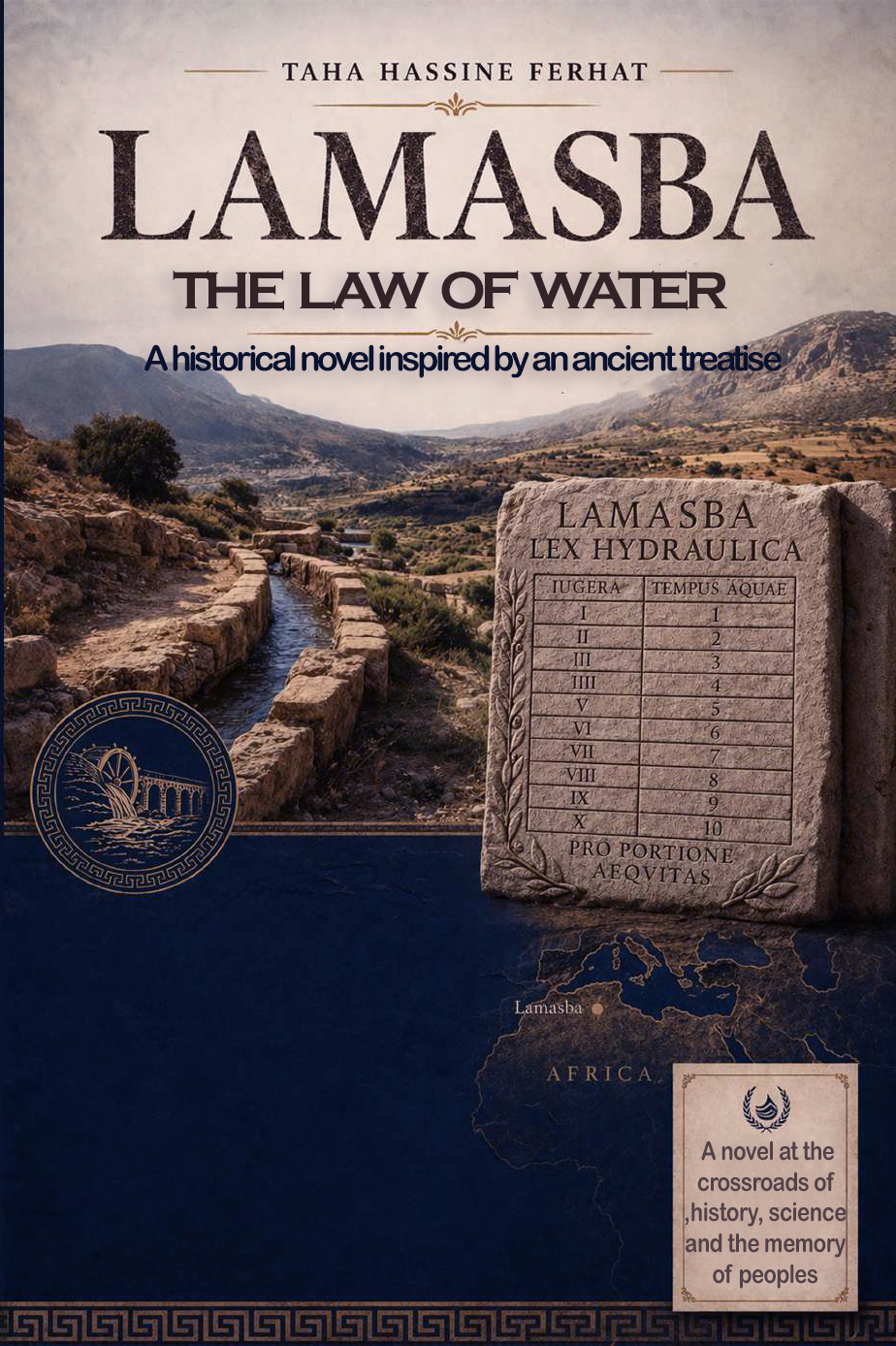
English edition
The English version, opening the story of Lamasba to a wider international readership.
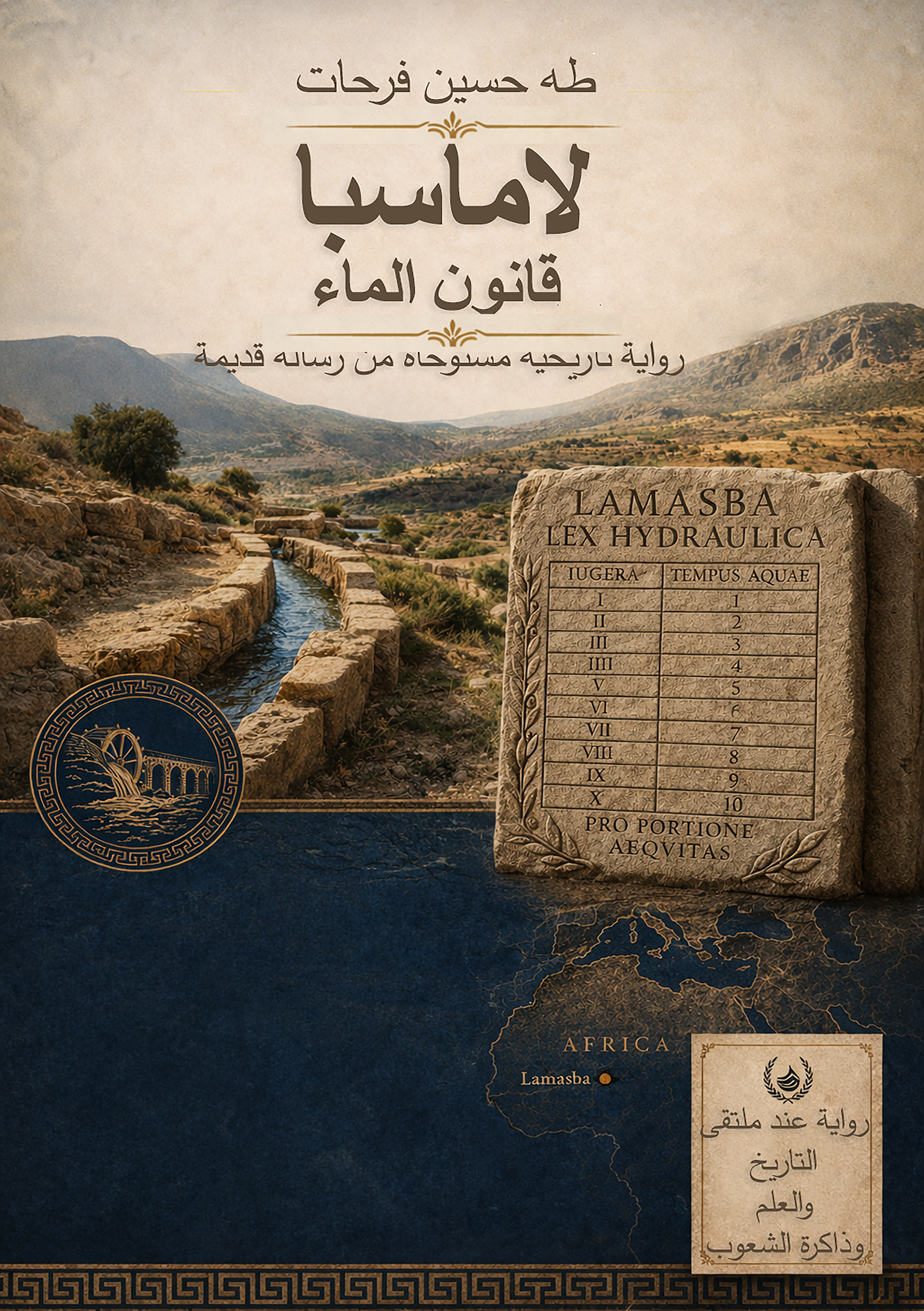
Arabic edition
The Arabic version of the novel, for Arabic-speaking readers and all who wish to draw closer to the memory of Lamasba and Merouana.
Conclusion
The novel as an act of fidelity
Lamasba: The Law of Water is not only a historical novel. It is also an act of fidelity to a land, a memory and a heritage. By bringing together literature, history and transmission, it seeks to draw Lamasba out of its isolation and give it back a place in the imagination, in heritage awareness, and in the dialogue between past and present.
Through the novel, Lamasba ceases to be merely an ancient name: it becomes a presence once more.